







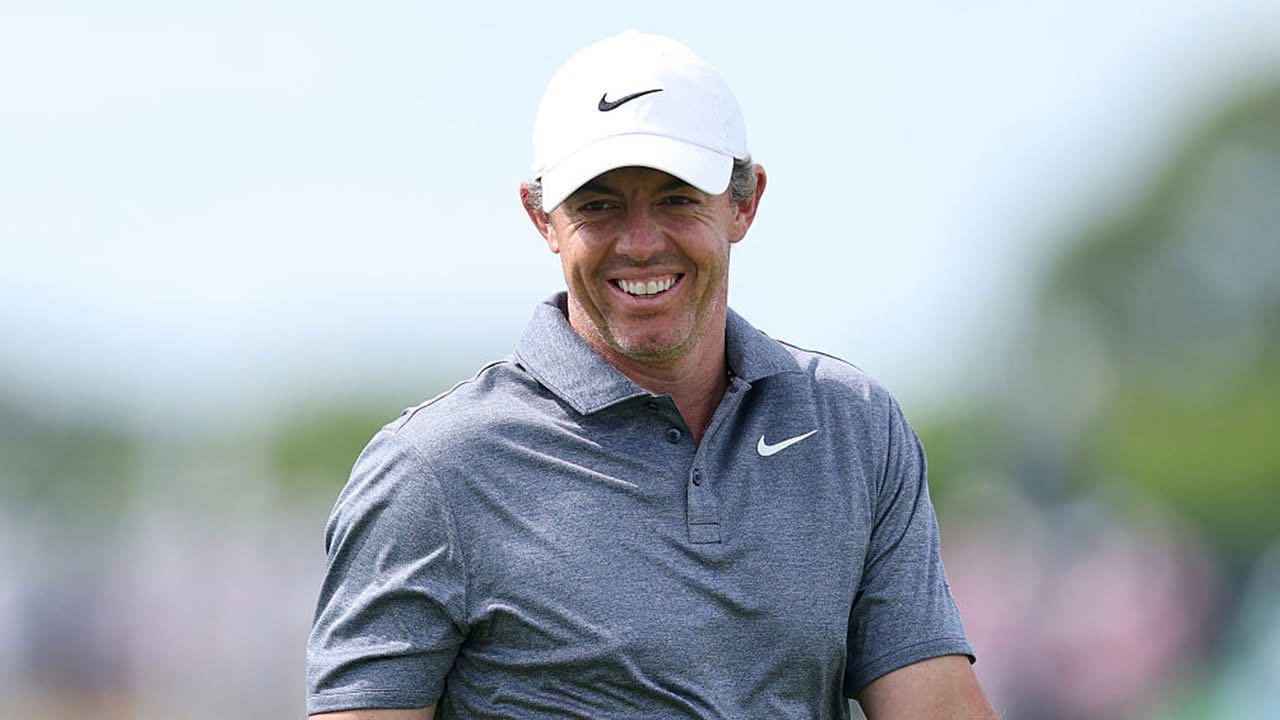
Rory McIlroy has made his position clear on the possibility of LIV Golf players returning to the PGA Tour, adding another major development to the ongoing uncertainty surrounding professional golf.
The six-time major champion, who has been one of LIV Golf’s most vocal critics since the breakaway league launched in 2022, has indicated that he would support former LIV players returning to the established tours.
His comments come at a critical moment for LIV Golf, which is facing significant financial uncertainty following Saudi Arabia’s Public Investment Fund decision to withdraw its financial backing after the 2026 season.
With several prominent golfers reconsidering their futures and the proposed LIV Golf 2.0 struggling to secure enough commitments, the possibility of players returning to traditional tours has become a major talking point in professional golf.
Rory McIlroy Says He Would Welcome LIV Golf Players Back
Speaking at the Bloomberg New Economy Forum in New Delhi on October 13, McIlroy was asked whether he would vote to allow LIV Golf players to return to the tours he competes on.
His response was direct.
“Yes, I would,” McIlroy said.
He explained that bringing some of the players back could benefit the business of professional golf and strengthen the tours’ competitive fields.
McIlroy added that a stronger group of players could benefit the sport as a whole, suggesting that the return of established stars would create opportunities for more compelling tournaments.
His comments represent an important development given his previous opposition to LIV Golf and the division it created within men’s professional golf.
However, his willingness to welcome former LIV players back does not mean that every golfer would automatically regain membership or receive unrestricted access to PGA Tour events.
The final decision would depend on the PGA Tour’s rules, eligibility requirements and the conditions established for returning players.
LIV Golf Faces an Uncertain Future
The uncertainty surrounding LIV Golf has intensified since Saudi Arabia’s Public Investment Fund announced that it would stop funding the league after the 2026 season.
The organization has been exploring a restructuring plan that could allow it to continue operating under a new model known as LIV Golf 2.0.
Private equity firm BC Partners has emerged as a potential investor, with a proposed $300 million investment tied to securing sufficient player commitments.
However, the league needs enough recognizable players to make the proposed circuit commercially viable.
Recent reports have indicated that several golfers are considering their options, while others have already announced that they will not participate in the proposed relaunch.
The situation has created uncertainty for players who joined LIV Golf after accepting substantial financial offers and committing to the league’s team-based format.
For some, the decision now involves weighing the financial opportunities associated with the proposed new league against the competitive and career advantages of returning to established tours.
Jon Rahm and Other Golfers Face Major Decisions
Jon Rahm is among the biggest names associated with the uncertainty surrounding LIV Golf’s future.
The two-time major champion has indicated that he will not participate in the proposed LIV Golf 2.0 arrangement, making his next career move a major subject of discussion.
Other prominent players, including Tyrrell Hatton, Ian Poulter, Louis Oosthuizen and Lucas Herbert, have also been linked to departures from LIV Golf or decisions to pursue opportunities elsewhere.
Their situations are not identical, and leaving LIV Golf does not automatically guarantee a return to the PGA Tour.
Players must still consider their contractual obligations, eligibility status and the requirements of whichever tour they intend to join.
For golfers who previously left the PGA Tour, returning could involve financial sacrifices, disciplinary consequences or restrictions on tournament participation.
Nevertheless, the number of players reconsidering their futures highlights how dramatically the professional golf landscape has changed.
Will the PGA Tour Allow LIV Golf Players to Return?
Although McIlroy has expressed support for welcoming former LIV Golf players back, the PGA Tour has not promised a general pathway for their return.
PGA Tour chief executive Brian Rolapp previously stated that the organization had no current plans to revive the Returning Member Program that enabled Brooks Koepka to return earlier in 2026.
Koepka’s return came with significant conditions, including a $5 million financial penalty, restrictions involving sponsor exemptions and the forfeiture of potential Player Equity Program benefits for five years.
His situation demonstrated that returning to the PGA Tour can be possible, but it may come at a considerable cost.
The PGA Tour has also emphasized the importance of accountability, its membership rules and maintaining the integrity of competition.
Consequently, McIlroy’s support should not be interpreted as an official PGA Tour decision to reinstate former members.
Even if other players leave LIV Golf, they may have to pursue alternative competitive opportunities while seeking a route back to the PGA Tour.
The distinction is important because a golfer’s decision to leave LIV Golf and the PGA Tour’s decision to accept that golfer are two separate matters.
McIlroy Previously Criticized LIV Golf’s Approach
McIlroy’s latest position is particularly noteworthy because of his outspoken criticism of LIV Golf when it first emerged.
The Northern Irishman had repeatedly expressed concerns that the breakaway league would divide professional golf, weaken established tours and disrupt the traditional competitive structure.
He also acknowledged that he and Tiger Woods had personal and professional interests at stake when LIV Golf began attracting leading players away from the PGA Tour.
However, McIlroy’s current position suggests that he sees potential benefits in bringing some of those players back, particularly as LIV Golf faces questions about its long-term sustainability.
He has also criticized how LIV Golf used its considerable financial resources, arguing that the organization could have worked more strategically with existing golf institutions.
His willingness to support returning players therefore does not necessarily mean he has changed his views about how LIV Golf operated.
Instead, he appears to distinguish between opposing the breakaway league’s original approach and recognizing the potential benefits of having elite golfers competing together again.
What Happens Next?
The coming weeks could prove decisive for LIV Golf and the players considering their futures.
The proposed LIV Golf 2.0 needs sufficient player commitments and financial backing to move forward, while golfers must decide whether the new arrangement offers enough security and competitive value to justify remaining with the organization.
Meanwhile, the PGA Tour faces questions about whether it should create another formal pathway for former members who want to return.
McIlroy’s comments could strengthen the argument for reconciliation, particularly among fans who want to see the sport’s biggest names competing against one another more regularly.
However, his personal opinion does not determine PGA Tour policy, and any return arrangement would require decisions from the organization’s leadership.
For players who choose to leave LIV Golf, the road back to the PGA Tour could still be complicated.