
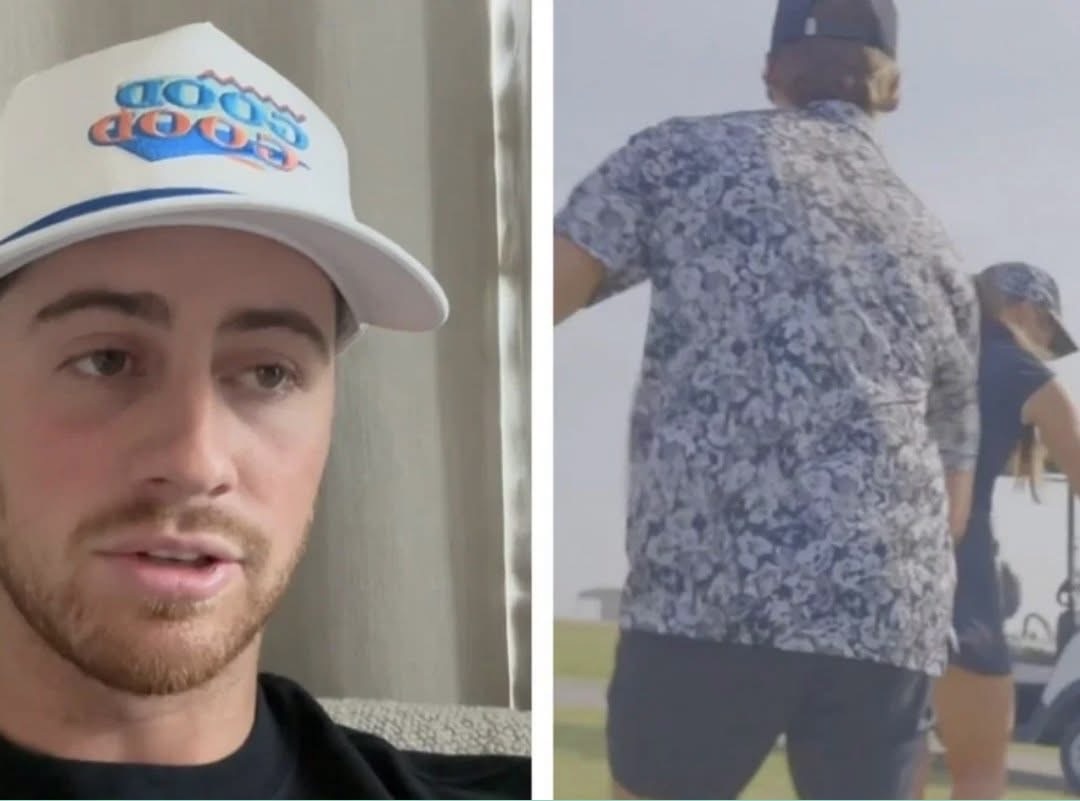
The fallout from the controversial Good Good Golf advertisement has taken another dramatic turn, with Good Good CEO Matt Kendrick publicly turning his criticism toward former business partner Callaway Golf.
Kendrick has accused Callaway of orchestrating what he described as a “co-ordinated media blitz” against Good Good after the golf equipment giant ended its relationship with the content-creation company and announced a $1 million donation to organizations working to prevent violence against women.
The latest development has added another layer to a controversy that has already resulted in widespread criticism, retailer fallout and serious questions about the future of Good Good Golf.
The dispute began after Good Good released a promotional video for a co-branded Callaway driver. The advertisement showed Good Good co-founder Garrett Clark aggressively shoving fellow golf creator Alexis Miestowski to the ground after she reached for the driver.
Although the video was reportedly intended as a parody inspired by the film Obsession, the creative decision immediately sparked backlash, with critics arguing that the advertisement trivialized violence against women.
The video was subsequently removed, and both Good Good and Callaway issued apologies.
However, the situation escalated significantly when Callaway announced that it was ending its relationship with Good Good.
Callaway also committed $1 million to organizations working to prevent violence against women and support victims. The company said the donation was part of its response to the controversy and acknowledged its own role in the situation. (ABC News)
Kendrick turns his attention to Callaway
Rather than accepting Callaway’s decision quietly, Good Good CEO Matt Kendrick took to social media to challenge the company’s version of events.
Kendrick accused Callaway of attempting to distance itself from the advertisement after being involved in its development and approval.
He characterized the company’s decision as part of a “co-ordinated media blitz,” suggesting that Callaway was attempting to protect its own reputation by placing the bulk of the blame on Good Good.
Kendrick also questioned the significance of Callaway’s $1 million charitable donation, describing it as a “cover up” rather than simply an act of accountability.
His comments have opened a new front in the controversy because they raise questions about how much responsibility each company carried for the advertisement before it was released.
Callaway, meanwhile, has not publicly endorsed Kendrick’s characterization of events. (Golfmagic)
The $1 million donation becomes a new point of contention
Callaway’s decision to donate $1 million was initially presented as part of the company’s effort to respond to the backlash.
The company said violence against women was unacceptable and should never be trivialized, normalized or used as entertainment.
But Kendrick’s response has transformed the donation into another point of dispute.
From his perspective, the timing of the donation and the announcement that Callaway was cutting ties with Good Good represented more than an attempt to make amends. He suggested that the moves were designed to shift public perception and protect Callaway’s brand.
That accusation is significant because Callaway was not simply an outside company whose logo appeared on the advertisement. The controversial video promoted a co-branded product, making the relationship between the two companies central to questions about responsibility.
The dispute therefore goes beyond whether the advertisement was offensive.
It has become a question of who approved it, who was responsible for its distribution, and who should bear the consequences after the backlash.
Garrett Clark had already apologized
Good Good co-founder Garrett Clark, who appeared in the advertisement, previously acknowledged the criticism and apologized.
Clark said the advertisement was a bad idea and expressed regret over the decision to release it.
Good Good also issued a broader response acknowledging the harm caused by the video and saying the company needed to improve internally.
But the apologies have done little to stop the controversy.
Instead, the situation has continued to grow as more companies and organizations distance themselves from Good Good.
The controversy has become particularly damaging because Good Good has built its identity around a younger generation of golf fans and has become one of the most recognizable golf-content brands on YouTube.
That audience has helped transform Good Good from a group of golf creators into a significant commercial brand.
The same visibility, however, has meant that mistakes can spread rapidly.
Retailers begin pulling Good Good products
The consequences have extended beyond the relationship with Callaway.
Major retailers, including Dick’s Sporting Goods and Golf Galaxy, have pulled Good Good merchandise following the controversy. (ESPN.com)
That development could have a much greater financial impact on Good Good than criticism on social media.
For a consumer brand, retailer relationships provide access to customers who may never encounter the company’s online content.
Losing that distribution can therefore affect sales, visibility and future partnerships.
The fallout has also reached the professional golf world.
Good Good withdrew as title sponsor of an upcoming PGA Tour event in Austin, while the PGA Tour confirmed that the tournament would continue under a different sponsorship arrangement. (New York Post)
The Golf Channel also moved away from plans connected to the “Big Break x Good Good” project following the controversy. (MarketWatch)
In a matter of days, a short promotional video turned into a much larger business crisis.
PGA Tour leadership weighs in
The controversy has also drawn criticism from PGA Tour leadership.
PGA Tour CEO Brian Rolapp publicly questioned the advertisement and described the situation as concerning.
That intervention demonstrated how far the controversy had moved beyond the social-media space.
Good Good’s rise has been closely connected to the changing golf landscape, particularly the sport’s attempts to reach younger audiences through creators, influencers and digital entertainment.
As a result, the controversy has created difficult questions for organizations that had embraced Good Good as part of that new generation of golf media.
The central issue is no longer simply whether a particular advertisement crossed a line.
It is whether brands can trust Good Good to represent them responsibly in the future.
Kendrick reportedly open to legal action
Kendrick’s latest statements have also raised the possibility of a legal battle.
In response to a social-media user, the Good Good CEO indicated that he was not opposed to pursuing legal action against Callaway.
That does not necessarily mean a lawsuit will happen, and no legal action has been confirmed.
Nevertheless, the comment illustrates just how severely relations between the two companies have deteriorated.
The partnership that once centered on promoting golf equipment has now become a public dispute over responsibility, reputation and accountability.
If legal proceedings were eventually initiated, questions surrounding the advertisement’s creation, approval process, contractual obligations and distribution could become central to the case.
For now, however, Kendrick’s accusations remain his characterization of the situation, rather than an established legal finding.
Was Callaway trying to protect itself?
That question is now at the heart of the controversy.
Kendrick’s accusation that Callaway launched a “co-ordinated media blitz” suggests he believes the company deliberately positioned itself as the party taking action against Good Good rather than acknowledging shared responsibility.
Callaway’s decision to end the partnership and announce the $1 million donation certainly changed the public narrative.
Instead of being viewed simply as a company involved in a controversial advertisement, Callaway positioned itself as an organization taking action after recognizing the harm caused.
But that strategy has now been challenged by Kendrick.
His argument essentially asks why Callaway should receive credit for distancing itself from the controversy if, as he alleges, the company had previously been involved in the process that produced the advertisement.
Callaway has not publicly accepted Kendrick’s allegations.
A crisis that keeps getting bigger
What began as a short advertisement has now developed into one of the biggest controversies surrounding a golf-content company in recent memory.
Good Good has faced criticism from golf fans, lost its relationship with Callaway, seen retailers pull merchandise and withdrawn from a planned PGA Tour sponsorship.
The company has also seen the controversy become a national conversation about the way violence against women is portrayed in advertising and entertainment.
For Callaway, the situation carries its own reputational risks.
The company must now balance its decision to sever ties with Good Good against questions about its own involvement in the advertisement and the extent