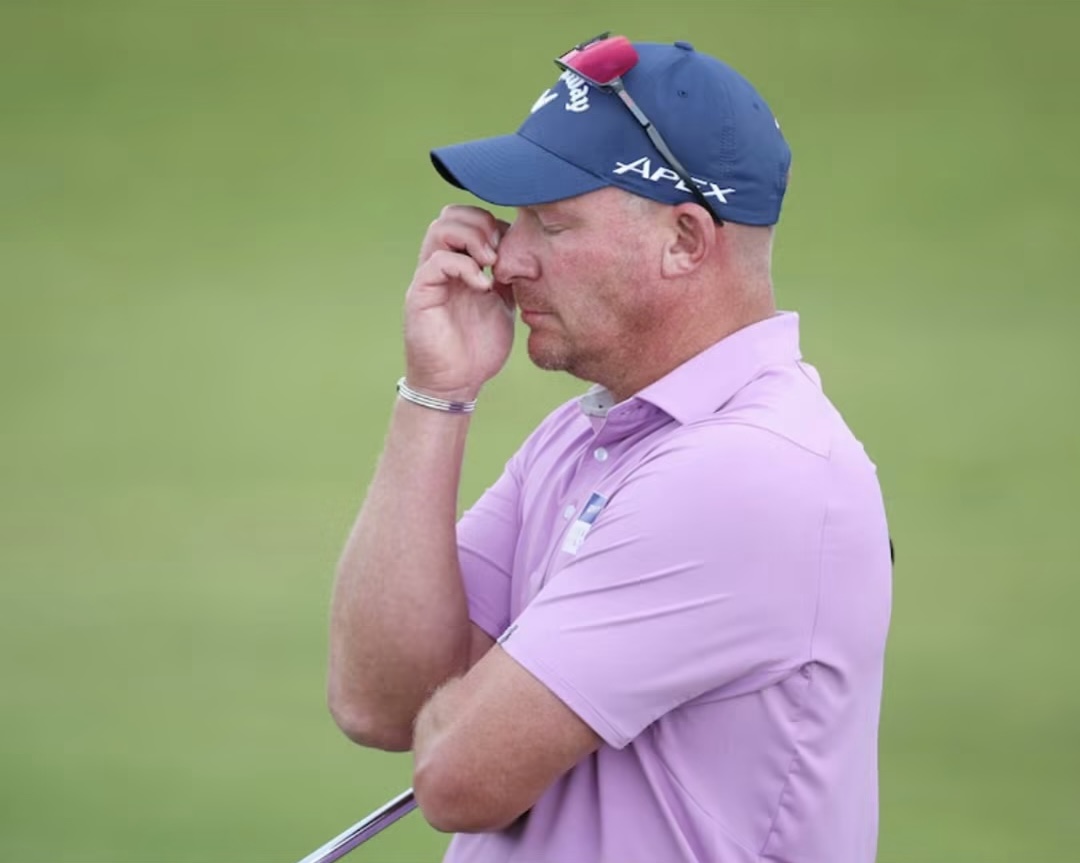








Callaway has issued a new response as the controversy surrounding Good Good Golf’s divisive advertisement continues to generate widespread discussion across the golf world.
What began as a promotional campaign for a golf driver has quickly developed into a serious reputational crisis involving one of the sport’s most recognizable equipment brands and one of its biggest golf-content creators.
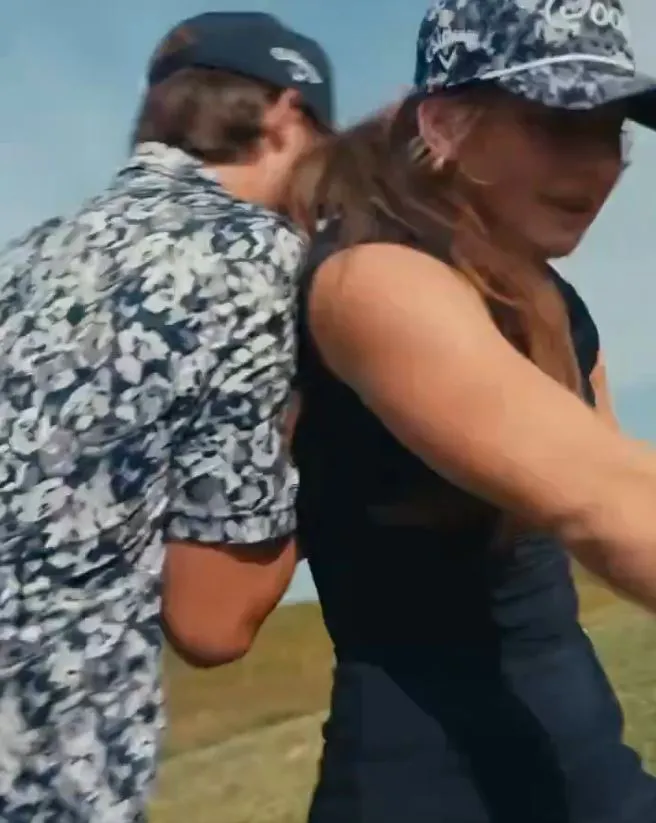
The advertisement, which featured Good Good co-founder Garrett Clark and content creator Alexis Miestowski, triggered a wave of criticism after viewers objected to the way the scene portrayed Clark pushing Miestowski to the ground during an argument over a golf club.
Although the advertisement was reportedly created as a fictional, exaggerated piece of entertainment, its reception was dramatically different from what those involved had intended.
The backlash intensified across social media, with viewers questioning the judgment behind the concept and the decision to approve and publish it
CALLAWAY ACKNOWLEDGES THE BACKLASH
Callaway’s latest response comes after days of growing criticism surrounding its involvement in the campaign.
The company has acknowledged that the advertisement should not have been approved in the form in which it was released and accepted responsibility for shortcomings in its review process.
The controversy has placed considerable attention on the relationship between major sports brands and social-media creators.
Good Good has built its reputation by creating highly entertaining and often unconventional golf content for a younger audience. Callaway, meanwhile, is one of the biggest names in golf equipment.
Their collaboration therefore carried significant visibility.
The decision to approve an advertisement that many viewers considered inappropriate has raised questions about how much oversight should exist when traditional sports brands work with fast-growing digital media companies.
THE ADVERTISEMENT THAT STARTED EVERYTHING
The controversy began when the advertisement was released online.
The campaign centered around a new Callaway driver and used an intentionally dramatic storyline. In the video, Miestowski reaches for Clark’s golf club before the situation escalates and Clark pushes her to the ground.
Clark then makes a threatening-sounding remark about his new driver.
While the scene was intended to be fictional and exaggerated, many viewers said the humor did not land.
Instead, critics argued that the advertisement appeared to trivialize violence against a woman in the name of promoting a golf product.
The response was immediate.
Comments criticizing the advertisement began spreading across social media, while clips from the campaign continued circulating even after the original content was removed.
GOOD GOOD’S RESPONSE
Good Good eventually addressed the controversy and apologized for the advertisement.
The company faced increasing pressure to explain how the campaign was created, who approved it and why it was considered acceptable to publish.
Garrett Clark also spoke publicly about the controversy.
His response attempted to provide context surrounding the advertisement while acknowledging that the campaign had gone too far.
Clark also condemned abusive comments directed toward Miestowski following the backlash.
That became an important part of the discussion because the controversy did not remain limited to the advertisement itself.
As the video went viral, people involved in the campaign became targets of intense online criticism.
The situation highlighted how quickly a controversial social-media campaign can move beyond the original content and affect everyone associated with it.
ALEXIS MIESTOWSKI ALSO BECAME PART OF THE STORY
Miestowski’s involvement has attracted considerable attention because she was the person portrayed as being pushed in the advertisement.
The controversy placed her in an uncomfortable position as viewers debated whether the campaign crossed a line.
Her eventual comments on the situation added another dimension to the story, as the public began trying to understand what happened behind the scenes and how those involved viewed the campaign.
The debate also raised broader questions about the responsibilities of creators when producing controversial content.
A concept can be scripted and consensual between the people involved, but that does not necessarily mean audiences will interpret it in the same way.
That disconnect appears to have been one of the central problems with the campaign.
CALLAWAY’S INVOLVEMENT BECAME A MAJOR ISSUE
Perhaps the biggest reason the controversy became so significant was Callaway’s involvement.
This was not simply an independent YouTube video created by a group of influencers.
Callaway was directly connected to the advertising campaign.
As a major golf equipment manufacturer, the company has an established reputation and a broad customer base.
That meant the advertisement was judged not only as entertainment but also as corporate marketing.
The controversy consequently placed pressure on Callaway to explain its role in approving the campaign.
The company ultimately determined that the partnership could no longer continue.
Callaway ended its relationship with Good Good and announced a $1 million donation to organizations supporting victims of domestic violence and working to prevent violence against women.
That decision demonstrated how seriously the company viewed the situation.
THE FALLOUT HAS GROWN BEYOND CALLAWAY
The controversy has also created problems for Good Good’s wider business relationships.
Good Good had established partnerships and projects across the golf industry, making the situation considerably bigger than a single advertisement.
The company’s relationship with the PGA TOUR also came under scrutiny.
Good Good had been connected to a planned PGA TOUR event in Austin, but the company ultimately withdrew as title sponsor following the backlash.
The Golf Channel’s planned Good Good-related project was also affected.
Meanwhile, retailers reportedly began removing Good Good merchandise from their stores and online platforms.
For a company that has built a large business around golf content, merchandise, sponsorships and partnerships, the potential financial and reputational consequences are significant.
WHY THE CONTROVERSY HAS BECOME SO BIG
The scale of the backlash reflects a broader change in the sports-media landscape.
Golf content has changed dramatically over the past decade.
Traditional golf coverage once dominated the sport’s media environment, but YouTube creators and social-media personalities have developed enormous audiences.
Good Good is one of the most recognizable examples of that transformation.
The company’s success has helped bring younger audiences into golf through entertainment-focused videos, challenges, competitions and collaborations.
With that influence comes greater responsibility.
Brands working with creators must consider not only whether a concept is funny or attention-grabbing but also how it could be interpreted by millions of people who have no knowledge of the context behind the production.
The Callaway controversy demonstrates what can happen when that distinction is overlooked.
A WARNING FOR BRANDS AND CREATORS
The situation could have consequences beyond Good Good and Callaway.
Major companies increasingly rely on creators to reach younger audiences.
Influencer marketing can provide enormous exposure, but it also creates risks.
A traditional advertising campaign may go through multiple layers of corporate review.
Creator-led campaigns can move much faster, sometimes blurring the line between entertainment and professional advertising.
The Good Good controversy has therefore raised questions about whether companies need stronger safeguards when collaborating with influencers.
It also demonstrates that controversy cannot always be controlled once content reaches the internet.
Deleting a video does not necessarily end the story.
Screenshots, clips and reposts can continue circulating long after the original advertisement disappears.
THE BIG QUESTION FOR GOOD GOOD
For Good Good, the most important issue now is rebuilding trust.
The company has spent years establishing itself as one of the leading names in online golf content.
That reputation was built through a combination of entertainment, personalities and a strong relationship with its audience.
The controversy has put that relationship under pressure.
Apologies may help, but rebuilding confidence will likely require more than statements.
Viewers and business partners will be watching how Good Good handles future advertising campaigns, sponsorships and creative decisions.
The company may also need to demonstrate that lessons have been learned internally.
CALLAWAY’S RESPONSE MARKS A TURNING POINT
Callaway’s decision to publicly address the controversy represents an important moment in the unfolding story.
Rather than allowing the issue to fade away, the company’s response acknowledges the seriousness of the criticism and the failure of its approval process.
But questions remain.
Could the advertisement have been stopped before it was released?
Why did multiple layers of review fail to identify the potential backlash?
And what changes will be made to prevent something similar from happening again?
Those questions will likely continue to follow both companies.
THE CONTROVERSY IS FAR FROM OVER
The Good Good controversy has evolved from a controversial advertisement into a much larger discussion about advertising, influencer culture, corporate responsibility and the changing face of golf media.
Callaway has taken action.
Good Good has apologized.
Garrett Clark has addressed the backlash.
Miestowski has also faced the intense public attention surrounding the campaign.
Yet the consequences continue to unfold.
For Callaway, the priority will be protecting a decades-old brand reputation.
For Good Good, the challenge is even more personal: convincing fans, sponsors and business partners that the company can learn from the mistake and move forward.
What started as an attempt to create a memorable golf advertisement has become one of the most closely watched controversies in the golf-content world.
And as the debate continues, the biggest question may no longer be about the advertisement itself.
It may be about what Good Good and Callaway do next.