





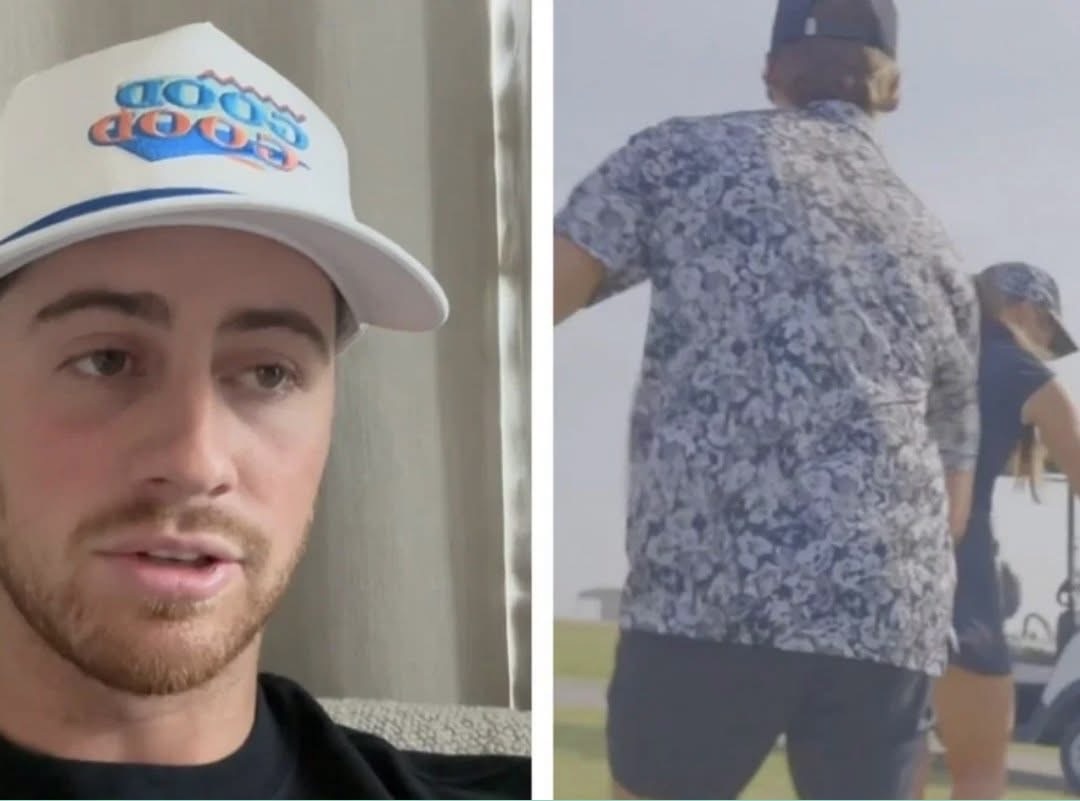
Good Good Golf CEO Garrett Clark has addressed the growing backlash surrounding the company’s controversial Callaway driver advertisement, as the online reaction to the video continues to intensify.
The advertisement, which was created as part of Good Good’s promotional partnership with Callaway, quickly became a major talking point after viewers criticized the way a woman was portrayed being pushed to the ground during the video.
What was intended to be a humorous and attention-grabbing golf advertisement instead sparked a wave of criticism across social media, with many viewers questioning the creative direction behind the campaign and arguing that the scene went too far.
The controversy has placed renewed attention on Good Good, one of the most recognizable brands in golf content, and has also raised questions about the responsibilities that come with producing viral advertising for a large online audience.
Garrett Clark Responds to the Backlash
As criticism continued to spread, Garrett Clark addressed the controversy and the reaction surrounding the advertisement.
Clark’s response comes at a time when the discussion has moved beyond the original video itself, with fans and critics debating whether the advertisement was simply an attempt at edgy humor or whether the execution crossed a line.

The controversy has generated significant conversation among golf fans, particularly because Good Good has built its reputation around creating entertaining, accessible and personality-driven golf content.
For many of the company’s followers, the backlash has been surprising because Good Good’s content has traditionally focused on challenges, competitions, entertainment and the personalities of its creators.
The Callaway advertisement, however, presented a different situation.
Rather than simply promoting a golf product, the video used a physical-comedy sequence that viewers interpreted in very different ways.
Some defended the advertisement as exaggerated promotional content that was never intended to be taken literally. Others argued that the context did not excuse the decision to portray the incident in the first place.
What Sparked the Controversy?
The controversy centers on a scene in the advertisement involving a woman and a Good Good member.
The footage quickly circulated online, with clips being reposted and discussed independently from the original advertisement.

As the clip reached audiences who may not have been familiar with the broader campaign, criticism intensified.
Some viewers described the scene as inappropriate, while others questioned why such a sequence would be approved for a major brand advertisement.
The debate became particularly complicated because advertising campaigns involving major companies typically go through multiple stages of creative development and approval.
That led some viewers to question how the controversial scene made it into the final version of the advertisement.
The criticism was not limited to the content of the scene itself. Some people also questioned whether the attempt to create a viral moment had overshadowed the actual product being promoted.
A Bigger Problem for Good Good?
Good Good has grown significantly from its early days as a golf-focused YouTube channel into a major golf entertainment brand.
The company has developed partnerships with major names in the golf industry and built a large audience around its creators.
That growth also means that the company’s content receives significantly more scrutiny than it did in its earlier years.
A joke that might have generated a small amount of discussion in the past can now become a major social-media controversy within hours.
The Callaway advertisement is a clear example of that dynamic.
Instead of generating discussion solely about the driver, the campaign became associated with the controversial scene.
That has created an uncomfortable situation for everyone involved because the attention surrounding the advertisement is now focused heavily on the controversy rather than the product itself.
Fans Are Divided
One of the most notable aspects of the situation has been the divide among viewers.
Some Good Good fans have defended Clark and the company, arguing that the advertisement should be understood as scripted entertainment and that viewers should not interpret the scene as a real incident.
Others have taken a much more critical position.
They argue that companies with large audiences have a responsibility to consider how their content could be perceived, particularly when an advertisement involves physical aggression or potentially sensitive situations.
The disagreement has produced heated conversations online, with supporters and critics offering very different interpretations of what happened.
For Good Good, the controversy represents another example of the difficult balance between entertainment and responsibility.
The Pressure of Viral Advertising
The situation also highlights a larger trend in modern sports marketing.
Traditional golf advertising often relies on professional players, product demonstrations and straightforward promotional messaging.
Content-driven companies such as Good Good operate differently.
Their audiences are accustomed to humor, challenges, dramatic moments and unpredictable situations.
That style can make advertisements feel more entertaining and less like traditional commercials.
But there is also a downside.
When brands attempt to recreate the same viral energy in sponsored content, there is always a risk that the creative concept will overshadow the product or generate unintended criticism.
In this case, the reaction suggests that the controversial moment became the story.
Callaway Also Faces Attention
Because the advertisement was connected to Callaway, the controversy has inevitably drawn attention to the relationship between the two companies.
Callaway is a major name in golf equipment, and partnerships involving a brand of that size can carry significant expectations.
That means the controversy is not simply an issue for Good Good’s audience.
It also raises questions about how major brands evaluate creative concepts before they are released publicly.
When a sponsored campaign generates widespread criticism, both the content creator and the sponsoring company can come under scrutiny.
For now, much of the conversation remains centered on Good Good and Clark, but the wider partnership has inevitably become part of the discussion.
Garrett Clark’s Response Comes Under the Spotlight
Clark’s decision to address the backlash has added another chapter to the controversy.
Whenever a major creator or company responds to criticism, the response itself can become just as important as the original incident.
Audiences often look for several things: accountability, clarification, context and an explanation of how the decision was made.
For Clark and Good Good, the challenge is finding the right balance between defending the creative team and acknowledging why viewers were uncomfortable with the advertisement.
The response could ultimately determine whether the controversy fades away or continues to grow.
Why This Could Matter for Good Good
Good Good has spent years building a strong relationship with its audience.
That relationship is one of the company’s biggest assets.
Its viewers don’t simply watch golf videos; many feel connected to the personalities behind the brand.
Because of that, controversies involving the company can sometimes feel more personal to fans than traditional advertising disputes.
The current backlash therefore presents an important moment for Good Good.
How the company handles criticism could influence how its audience responds to future sponsored campaigns.
It may also encourage the brand to reconsider how far it is willing to go in pursuit of viral moments.
The Bigger Conversation
Ultimately, the controversy has opened a broader discussion about the changing nature of golf content.
Golf has traditionally been associated with professionalism, sportsmanship and a relatively conservative advertising style.
Good Good and other modern golf-content companies have helped change that image by introducing a younger, more entertainment-focused approach.
That evolution has attracted millions of viewers who might not have traditionally followed golf.
But with that new style comes new challenges.
Creators must constantly find ways to remain entertaining without alienating the audience that helped them grow.
The Callaway advertisement demonstrates how quickly that balance can become complicated.
What one viewer considers harmless comedy may be seen by another as completely inappropriate.
What Happens Next?
For now, attention remains firmly on Good Good, Garrett Clark and the response to the controversial advertisement.
Whether the backlash eventually disappears or becomes a longer-term issue will likely depend on how the company and the people involved handle the situation going forward.
The controversy has already generated substantial discussion online, and the advertisement has arguably received far more attention than a conventional golf commercial ever would.
The key question now is whether that attention ultimately benefits or damages the Good Good brand.
One thing is certain: what began as a promotional campaign for a Callaway driver has turned into a much larger conversation about comedy, advertising, social-media culture and the responsibilities that come with having a massive audience.
And with Garrett Clark now addressing the backlash, the golf community will be watching closely to see what comes next.