




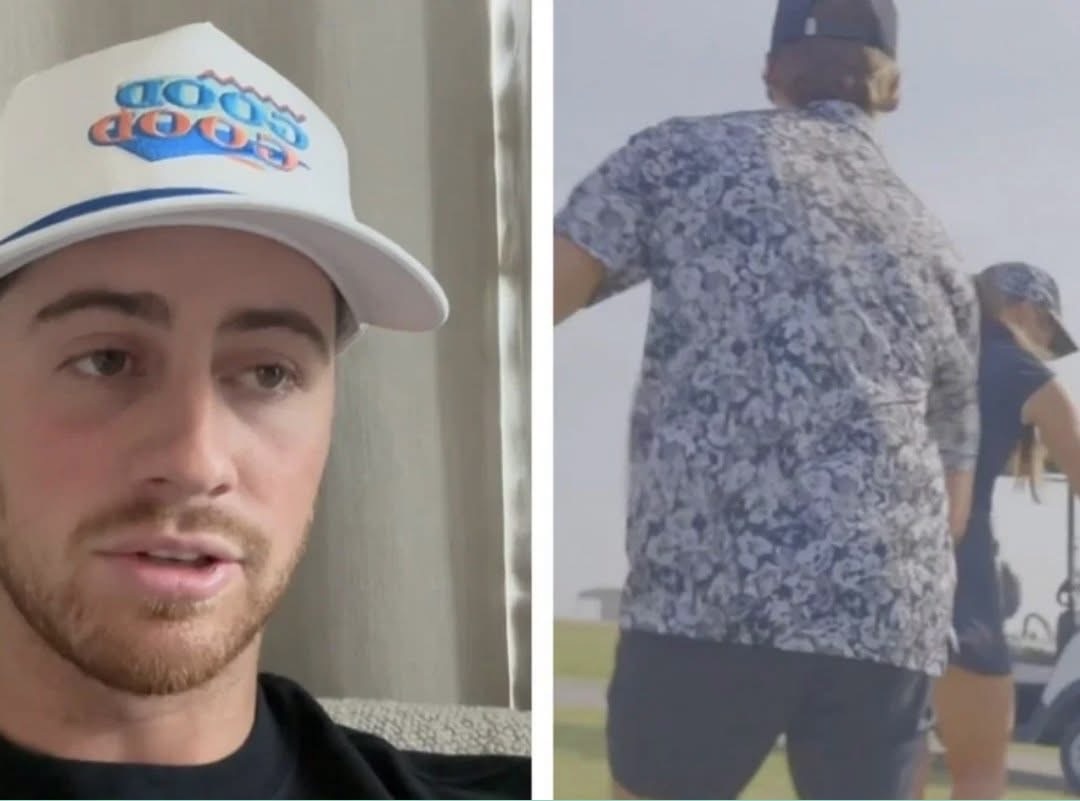
The fallout from Good Good Golf’s controversial advertisement has taken another dramatic turn, with the company’s CEO and co-founder Matt Kendrick launching a fierce public attack on former partner Callaway Golf.
What began as backlash over a short promotional video has now developed into a bitter dispute between two major names in the golf industry, with Kendrick accusing Callaway of attempting to shift responsibility for an advertisement that the equipment giant had previously approved.
The escalating confrontation comes after Callaway ended its relationship with Good Good and pledged $1 million toward organizations working to combat violence against women. The decision followed widespread criticism of an advertisement featuring Good Good co-founder Garrett Clark pushing female team member Alexis Miestowski to the ground after she reached for a Callaway-branded driver.
A CONTROVERSIAL AD THAT CHANGED EVERYTHING
The advertisement was created as a parody inspired by the horror film Obsession. In the video, Clark reacts aggressively when Miestowski attempts to touch the golf club, ultimately shoving her to the ground.
Although the video was intended as comedy and satire, viewers quickly criticized it for appearing to trivialize violence against women.
The backlash spread rapidly across social media, forcing Good Good to remove the advertisement and issue an apology. Clark subsequently addressed the controversy himself, acknowledging that the concept was a serious mistake.
Callaway also initially apologized, acknowledging that the advertisement had passed through its review process.
But the situation changed dramatically when Callaway announced that it would cut ties with Good Good.
The equipment company also committed $1 million to organizations supporting survivors and combating violence against women.
That decision appears to have transformed the controversy from an advertising failure into an increasingly hostile dispute between the two companies.
MATT KENDRICK FIRES BACK
Good Good CEO and co-founder Matt Kendrick has now pushed back forcefully against Callaway’s handling of the situation.
According to reports, Kendrick accused Callaway of mounting what he described as a coordinated media effort designed to place the majority of the blame on Good Good after the advertisement had already gone through the approval process.
Kendrick’s comments represented a significant escalation.
Rather than simply accepting Callaway’s decision and allowing the controversy to fade, the Good Good executive publicly challenged the narrative surrounding the advertisement and questioned Callaway’s responsibility in allowing it to be released.
His argument is essentially that Good Good should not be treated as the only party responsible when Callaway was involved in the campaign and had approved the final advertisement.
That accusation has now opened an entirely new chapter in the controversy.
THE APPROVAL QUESTION
At the center of Kendrick’s criticism is one crucial question:
Who approved the advertisement?
Good Good and Callaway were working together on the campaign, and the advertisement promoted a co-branded Callaway product.
That makes the approval process particularly important.
Callaway has acknowledged that the advertisement went through its review process, while also saying that its review procedures failed.
After the backlash, Callaway said it was ending its relationship with Good Good.
Kendrick, however, has questioned why Callaway would approve the content before publicly distancing itself from Good Good once the backlash intensified.
Reports indicate that Kendrick believes Callaway’s subsequent response unfairly positioned Good Good as the primary culprit.
That disagreement has created an uncomfortable situation for Callaway.
The company is attempting to demonstrate accountability for allowing the advertisement to be released, while Kendrick is simultaneously arguing that Callaway cannot escape responsibility for its own approval.
KENDRICK HINTS AT POSSIBLE LEGAL ACTION
The situation has become even more serious because Kendrick has reportedly hinted at potential legal action against Callaway.
While no lawsuit has been confirmed, his comments have raised the possibility that the dispute could move beyond social media and public statements.
That would represent a dramatic escalation.
What initially appeared to be a marketing disaster could potentially become a legal battle over the circumstances surrounding the advertisement, its approval, the subsequent termination of the partnership and the financial consequences Good Good has faced.
For now, however, there is no confirmed lawsuit.
Callaway has not publicly responded in detail to Kendrick’s latest accusations.
GOOD GOOD HAS ALREADY SUFFERED MAJOR CONSEQUENCES
The impact of the controversy has gone far beyond the loss of Callaway.
Good Good has faced a rapidly expanding list of consequences since the advertisement went viral.
The company lost its Callaway partnership, while its merchandise was reportedly removed from major retailers including Dick’s Sporting Goods and Golf Galaxy.
Good Good also stepped away from its role as title sponsor of an upcoming PGA Tour event in Austin.
The Golf Channel subsequently postponed the premiere of Big Break x Good Good after a sponsor requested that Good Good branding be removed from the program.
In other words, the controversy has moved beyond one advertisement.
It is now affecting Good Good’s commercial relationships, television exposure, tournament involvement and broader reputation.
CALLAWAY ALSO FACES QUESTIONS
While Good Good has received the overwhelming share of criticism surrounding the advertisement, Kendrick’s latest comments have created questions for Callaway as well.
If the advertisement was reviewed and approved as part of a collaborative campaign, how did it make it through the company’s internal process?
And if Callaway believed the content was inappropriate, why was it approved in the first place?
Those questions are now part of the larger controversy.
Callaway’s decision to pledge $1 million to organizations fighting violence against women has been viewed as an attempt to demonstrate accountability and respond to the public backlash.
But Kendrick’s accusations suggest that the story may not end with Callaway’s apology.
Instead, both companies now appear to have very different interpretations of what happened behind the scenes.
GARRETT CLARK REMAINS AT THE CENTER OF THE CONTROVERSY
Good Good co-founder Garrett Clark remains one of the central figures in the controversy because he appears in the advertisement.
Clark has apologized for his involvement and acknowledged that the concept was a terrible idea.
However, the public reaction has continued even after the apology.
The advertisement’s removal did little to stop the controversy because copies of the footage continued circulating online.
That meant the incident continued generating attention even after Good Good and Callaway attempted to move forward.
For Clark, the situation represents one of the most serious controversies Good Good has faced since its rise from a YouTube golf group into a major golf-media company.
FROM PARTNERS TO ADVERSARIES?
The relationship between Good Good and Callaway had been significant.
The two brands had worked together for years, making the sudden collapse of their partnership particularly striking.
The dispute now raises questions about whether the relationship can ever be repaired.
Kendrick’s latest comments suggest that Good Good is not prepared to quietly accept Callaway’s version of events.
Instead, the company appears determined to challenge what it believes was an unfair portrayal of its role in the scandal.
That could make reconciliation difficult.
A CORPORATE DISPUTE BECOMING A PUBLIC BATTLE
The most remarkable aspect of the situation is how quickly the controversy has evolved.
It started with a roughly 15-second promotional concept.
It became a social-media backlash.
Then came apologies.
Then Callaway ended the partnership.
Then retailers reportedly removed Good Good merchandise.
Then Good Good withdrew from a PGA Tour sponsorship.
Then a television project connected to Good Good was postponed.
And now the company’s CEO is publicly attacking its former business partner while raising the possibility of legal action.
The controversy has therefore become much bigger than the original advertisement.
It is now a battle over accountability, corporate responsibility and who should ultimately take the blame for a marketing campaign that went badly wrong.
WHAT HAPPENS NEXT?
The biggest question now is whether the dispute between Good Good and Callaway will escalate further.
If Kendrick follows through on his suggestion of legal action, the companies could find themselves battling over issues that extend well beyond public relations.
At the same time, Good Good faces the difficult task of rebuilding trust with fans, retailers, sponsors and the wider golf community.
Callaway, meanwhile, will have to answer questions about its own advertising review process and how the controversial material received approval in the first place.
For Good Good, the challenge is enormous.
The company built its identity around making golf younger, more entertaining and more accessible to a new generation. But the advertisement has placed that identity under intense scrutiny.
The company now has to convince audiences that the controversy was a catastrophic mistake rather than a reflection of its underlying culture.
And with Kendrick openly challenging Callaway’s handling of the fallout, the story appears far from over.
What started as a controversial Good Good advertisement has now become a full-blown corporate confrontation — and the latest attack from Matt Kendrick suggests the battle with Callaway may only be entering its next phase.