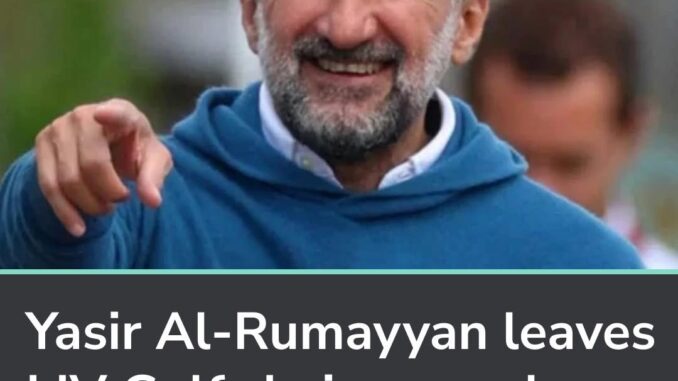
In a dramatic development that could reshape the future of professional golf, Yasir Al-Rumayyan has officially stepped down from his role as chairman of LIV Golf. The move marks one of the most significant leadership changes since the league’s formation and comes at a time when the global golf landscape is already undergoing intense transformation.
Al-Rumayyan, who also serves as the governor of Saudi Arabia’s Public Investment Fund, has been widely regarded as the central figure behind LIV Golf’s creation and rapid expansion. Under his leadership, the league emerged as a disruptive force, challenging the traditional dominance of established tours and redefining the financial structure of professional golf.
From the moment LIV Golf launched, it made headlines with its unprecedented financial power. Backed by the PIF, the league offered enormous signing bonuses and record-setting prize purses, attracting some of the biggest names in the sport. Players like Phil Mickelson, Dustin Johnson, Brooks Koepka, and Bryson DeChambeau became central to its identity, helping the circuit gain global attention almost instantly.
However, Al-Rumayyan’s departure now introduces a new layer of uncertainty. Leadership has always played a crucial role in shaping LIV Golf’s aggressive strategy, from player recruitment to its unique team-based format. With the chairman stepping aside, the league faces questions about its direction, governance, and long-term sustainability.
The timing of this decision is particularly noteworthy. It follows recent reports that the PIF has concluded its direct funding of LIV Golf, signaling a potential shift in how the league is financed and operated. While no official details have fully clarified the future structure, the combination of reduced financial backing and leadership change suggests that LIV Golf may be entering a new phase—one that could focus more on commercial viability and less on heavy upfront investment.
Beyond LIV Golf itself, the impact of this development could ripple across the wider golf world. The ongoing tension between LIV Golf and traditional tours, particularly the PGA Tour, has defined the sport in recent years. Negotiations, disagreements, and attempts at collaboration have kept fans and players in a constant state of uncertainty.
Al-Rumayyan was not just a financial backer but also a key figure in those broader discussions. His exit from the chairman role could influence how future negotiations unfold, especially if new leadership brings a different approach to resolving the divide in professional golf.
For players currently competing in LIV Golf, the immediate concern will likely center on stability. The league has built its reputation on financial security and innovation, but both could now be tested. Contract structures, prize funds, and team ownership models may all come under scrutiny as the organization adjusts to its new reality.
Despite the uncertainty, it would be premature to suggest that LIV Golf’s influence is fading. The league has already left a lasting mark on the sport, forcing traditional tours to increase prize money, enhance player benefits, and rethink event formats. Even critics acknowledge that LIV Golf accelerated changes that might have taken years to materialize otherwise.
Still, the departure of Yasir Al-Rumayyan represents more than just a leadership change—it signals the end of an era for a league that has thrived on bold ambition and financial strength. What comes next will determine whether LIV Golf can evolve into a sustainable, independent force or if it will struggle to maintain the momentum it once commanded.
As the situation continues to unfold, fans, players, and stakeholders across the golf world will be watching closely. The next chapter for LIV Golf is beginning, and its outcome could shape the future of the sport for years to come.
Leave a Reply