




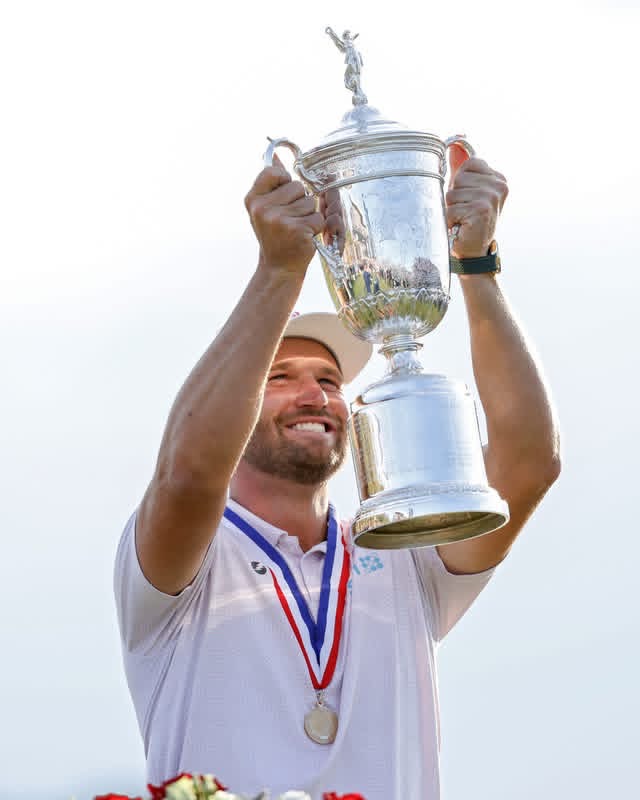
The golf world remains divided after a controversial video involving Wyndham Clark at the U.S. Open sparked widespread debate over a potential breach of the Rules of Golf. The footage, which quickly circulated across social media, led to accusations of cheating and questions over whether Clark had gained an unfair advantage during a crucial stage of the championship. Clark has now addressed the controversy, insisting he did nothing that intentionally violated the rules.
The incident became one of the biggest talking points of the tournament after the video spread across social media, with fans and analysts closely examining every frame. Some viewers argued that Clark’s actions may have breached Rule 8 of the Rules of Golf, while others believed the situation had been blown out of proportion and did not warrant any penalty.
As the debate intensified, Clark finally responded to the criticism, making it clear that he had no intention of breaking the rules. The former U.S. Open champion said he has always respected the integrity of the game and would never knowingly seek an unfair advantage over his competitors.
Clark explained that every decision he made during the round was based on what he believed was permitted under the Rules of Golf. He also emphasized that players regularly rely on tournament officials and referees when uncertainty arises, adding that he would have accepted any ruling made by those responsible for enforcing the rules.
The controversy has highlighted how quickly incidents can spread in the age of social media, with slow-motion replays and different camera angles often leading to heated debate long after shots have been played. While some fans remained convinced that Clark should have been penalized, others defended him, arguing that there was no conclusive evidence of wrongdoing and that accusations of cheating were unfair.
Several current and former players also weighed in on the discussion, noting that golf’s rulebook can be highly technical and that many situations require careful interpretation. They stressed that intent, the specific circumstances, and the judgment of rules officials are all important factors before any player can be found to have breached the Rules of Golf.
Despite the ongoing criticism, Clark remained focused on his performance and refused to allow the controversy to overshadow his tournament. He acknowledged that public scrutiny is part of competing at the highest level but reiterated that his only objective is to compete fairly and within the rules.
The debate has also renewed calls for greater clarity around certain aspects of the Rules of Golf, particularly in situations where television replays generate conflicting opinions. While governing bodies continue to review incidents on a case-by-case basis, many believe clearer guidance could help prevent similar controversies in future championships.
For now, Clark’s comments have added another chapter to one of the U.S. Open’s most talked-about moments. Although opinions remain sharply divided, the discussion has once again demonstrated how even the smallest on-course incident can dominate headlines and spark passionate debate throughout the golfing world.