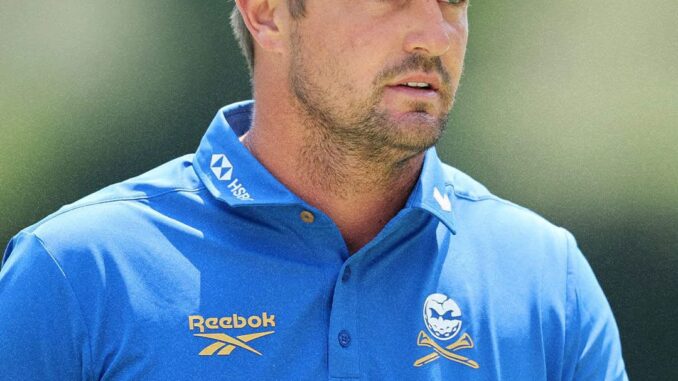
The ongoing turbulence surrounding LIV Golf has taken another dramatic turn, with respected broadcaster and former professional golfer David Feherty delivering a candid and unexpected admission that has intensified debate across the sport. At a time when tensions between LIV Golf and traditional tours remain unresolved, Feherty’s remarks have added a fresh layer of uncertainty to the league’s future.
Feherty, who has been closely associated with LIV Golf since its inception, has often been seen as one of its most recognizable voices. His decision to join the Saudi-backed circuit signaled early credibility for the breakaway league, especially as it sought to attract both players and audiences away from the established dominance of the PGA Tour. However, his latest comments suggest that even insiders are beginning to question the long-term sustainability and direction of the project.
In a revealing statement, Feherty acknowledged that the road for LIV Golf has been far more complicated than many initially anticipated. While he stopped short of outright criticism, his tone reflected a sense of realism, hinting that the league’s rapid rise has been accompanied by equally significant structural and reputational challenges. His admission appears to underscore concerns about fan engagement, competitive legitimacy, and the broader acceptance of LIV Golf within the global golfing ecosystem.
The timing of Feherty’s remarks is particularly significant. Reports of shifting financial strategies involving the Public Investment Fund, alongside ongoing negotiations between LIV Golf and the PGA Tour, have already created an atmosphere of instability. Feherty’s comments now amplify the perception that the league may be entering a critical phase, where its long-term identity and viability are under intense scrutiny.
Much of LIV Golf’s early success was built on its ability to lure top-tier talent with lucrative contracts. High-profile names such as Bryson DeChambeau and Jon Rahm brought instant visibility and credibility. Yet, despite these signings, critics have consistently questioned whether the league has managed to capture the emotional and historical resonance that defines traditional tournaments. Feherty’s remarks seem to echo these concerns, suggesting that money alone cannot secure lasting legitimacy in a sport deeply rooted in tradition.
Another pressing issue remains the fractured relationship between LIV Golf and the PGA Tour. Efforts to unify the professional golf landscape have stalled repeatedly, leaving players, sponsors, and fans in a state of uncertainty. The divide has created scheduling conflicts, eligibility complications for major championships, and a lingering sense that the sport is operating in parallel realities. Feherty’s admission subtly acknowledges this fractured environment, reinforcing the idea that resolution remains distant.
Beyond governance and competition, audience engagement continues to be a critical challenge. LIV Golf’s innovative format, including team-based play and shorter events, was designed to modernize the sport and attract younger viewers. While it has succeeded in generating curiosity, consistent viewership and deep fan loyalty have proven harder to establish. Feherty’s candid tone suggests an awareness that innovation alone does not guarantee connection, particularly in a sport where tradition plays a powerful role.
Despite the mounting challenges, it would be premature to declare LIV Golf’s decline. The league still benefits from substantial financial backing and a roster of world-class players. Moreover, its presence has already forced significant changes within the PGA Tour, from increased prize funds to structural reforms aimed at retaining talent. In that sense, LIV Golf has undeniably reshaped the professional golf landscape, even as it struggles to secure its own footing.
Feherty’s admission may ultimately serve as a pivotal moment rather than a fatal blow. His words reflect a broader shift from early optimism to cautious reflection, a transition that many within the sport appear to be undergoing. Whether LIV Golf can adapt, stabilize, and carve out a lasting place in the game remains to be seen, but one thing is clear: the conversation has moved beyond hype and into a more sobering evaluation of reality.
As the situation continues to evolve, all eyes will remain on how LIV Golf responds to both internal doubts and external pressures. For now, Feherty’s unexpected honesty has done more than just raise eyebrows—it has reignited a critical debate about the future of professional golf and whether the sport can find a path back to unity.
Leave a Reply