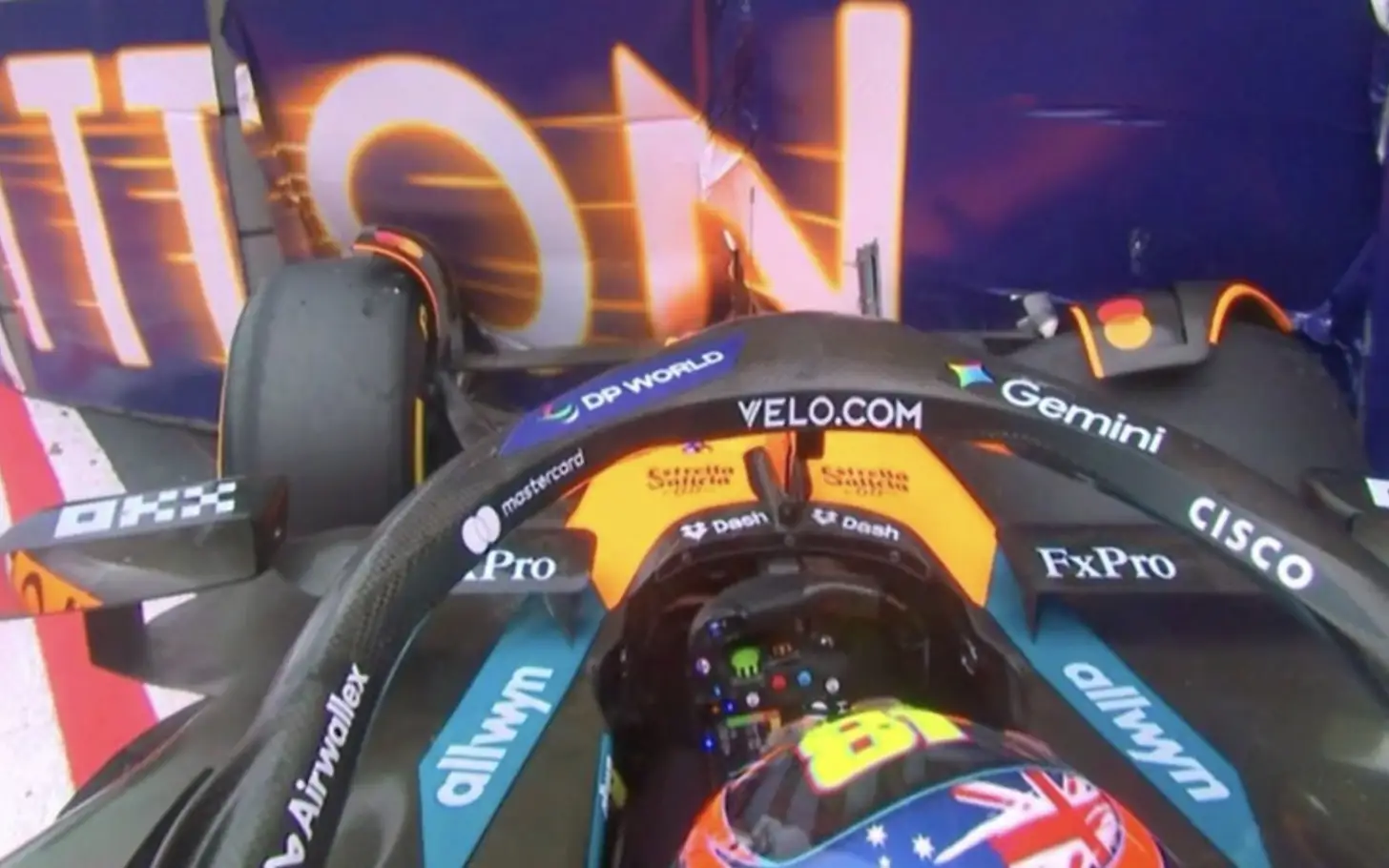
The FIA has issued a significant punishment to Red Bull Racing following an on-track incident involving Lando Norris during practice for the Abu Dhabi Grand Prix. The governing body described the situation as dangerous and concluded that the team had failed in its duty to properly communicate and ensure safe track conditions while Norris approached at high speed.
The incident took place during the final practice session when Yuki Tsunoda, driving for Red Bull’s programme, was completing a slow lap while Norris was increasing his pace. As Norris closed in at Turn 12, Tsunoda remained on the racing line and received no timely warning from the team that a faster car was rapidly approaching. This left Norris with minimal room and virtually no time to react. The stewards reviewed video footage, speed data and team-car communication, ultimately determining that Red Bull had not provided the necessary information to prevent a dangerous situation.
The FIA reacted quickly. Tsunoda was handed a financial penalty and a formal warning for his role, while Red Bull as an organisation received an additional penalty for failing to manage communication and track awareness. The stewards noted that this was not simply a case of impeding but a scenario that escalated into a genuinely unsafe moment because the team did not give proper instructions. Red Bull acknowledged responsibility soon after presenting their case, and the decision was reached within minutes of the hearing.
This ruling carries weight beyond the practice session itself. The FIA’s strong language signals the seriousness with which it views driver safety, even outside qualifying and race conditions. The decision also underscores that teams, not only drivers, are accountable for ensuring that all cars on track operate with proper situational awareness. The lack of communication from the Red Bull pit wall was identified as a critical factor that turned a routine slow lap into a high-risk moment.
The timing of the incident has ensured heightened attention. The Abu Dhabi Grand Prix is hosting a decisive point in the championship battle, with Norris, Verstappen and other contenders locked in a close fight. Any event involving top drivers is bound to attract scrutiny, and this punishment only intensified focus on Red Bull’s operations. Tensions between teams have already been evident in recent weeks, and this incident added fuel to ongoing discussions about standards of conduct and responsibility within the paddock.
For Red Bull, the punishment represents more than a financial cost. It places the team under closer monitoring for the remainder of the weekend and adds pressure at a moment when every decision holds significant implications for both driver and constructor standings. For other teams, the ruling serves as a reminder that even in practice sessions, safety protocols must be maintained with full discipline. Communication errors, even brief ones, can turn ordinary laps into dangerous situations.
The FIA’s stance also reinforces a broader direction in Formula One. With increasing speeds, tighter margins and more complex traffic during sessions, the governing body aims to emphasise strict operational standards. Teams will likely respond by adjusting their communication procedures and reinforcing guidelines to ensure drivers are fully aware of the cars around them at all times.
As the Abu Dhabi Grand Prix continues, attention will remain on whether this incident influences how teams approach both practice and qualifying. Red Bull will aim to demonstrate improved diligence, while other teams will be cautious to avoid similar scrutiny. The punishment has set a clear example that safety lapses, regardless of session or circumstance, will not be overlooked.
This moment may ultimately mark a shift in how the FIA handles responsibility during non-race sessions, especially in situations involving significant speed differentials. It is a firm reminder that every lap carries potential risk and that the responsibility to manage it lies jointly with drivers and teams.
Leave a Reply