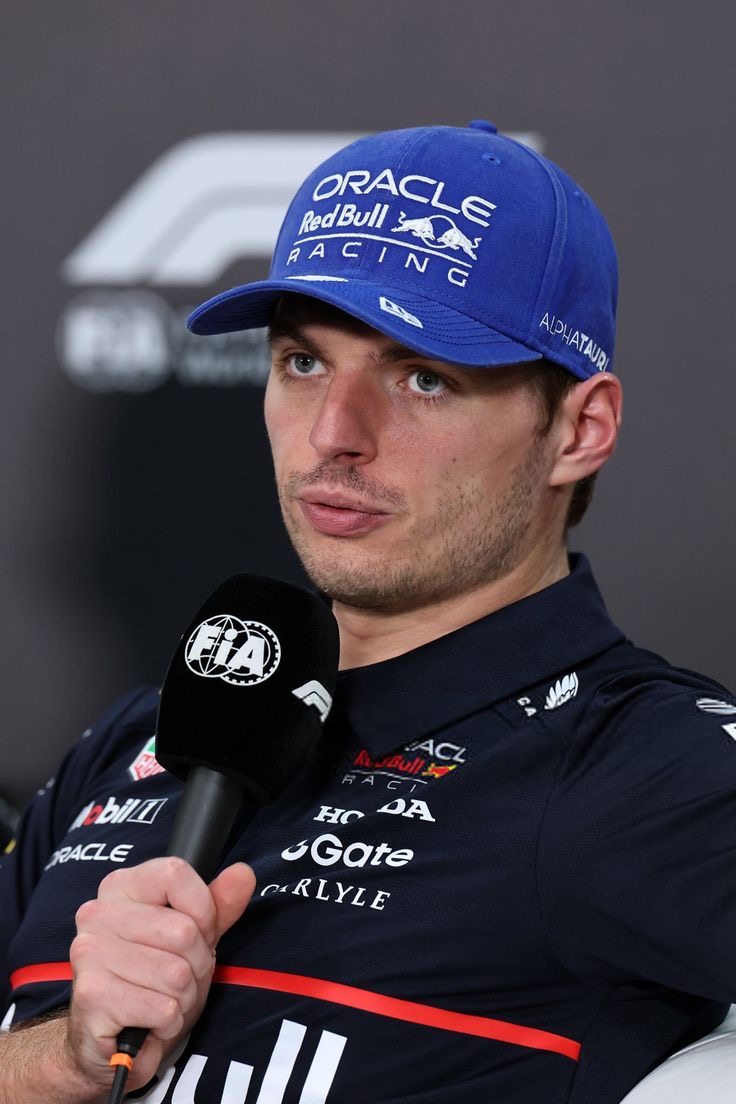



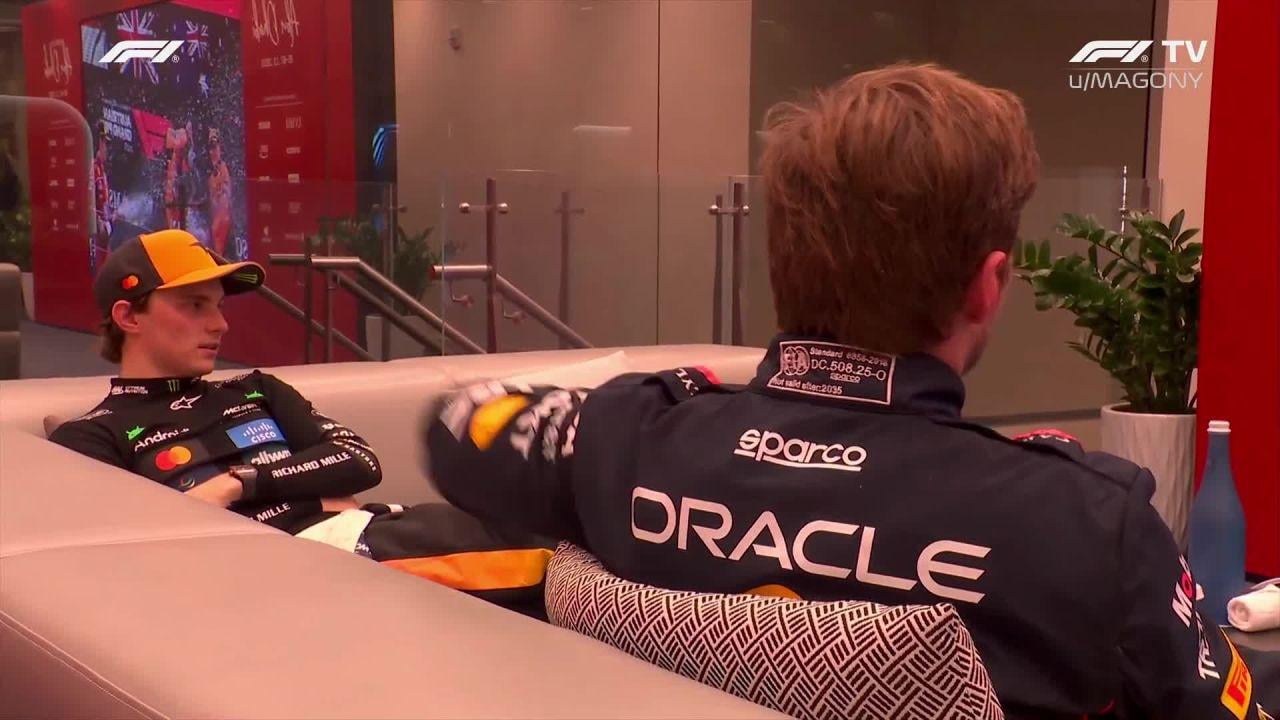
The final moments of the title-deciding Abu Dhabi Grand Prix delivered the kind of silence that says more than any heated exchange ever could. When the helmets came off and the adrenaline finally settled, one brief conversation between Oscar Piastri and Max Verstappen captured the tension that had been simmering all season. It was a quiet question, but one with enormous weight: “You didn’t want to…?”
In that unfinished sentence lay an accusation, a doubt, and a suggestion that a single decision on track may have shaped the destiny of the championship.
Throughout the race, the spotlight had been focused on strategic gambles and on-track decisions that carried championship implications. Verstappen, long known for his uncompromising racing style, found himself in a position where one move could have dramatically altered the title fight. Instead, he chose restraint. For some, that was maturity. For others, it was hesitation. For Oscar Piastri, it was a question he needed answered.
Sources in the paddock described the interaction as calm but loaded. Piastri had spent the final laps pushing with everything he had, hoping for a moment of opportunity that never came. The suggestion that Verstappen could have made a different split-second choice lingered in the air. It was not a confrontation. It was a search for clarity from a rival who understands the weight of championship deciders better than anyone.
Verstappen’s response, according to those close enough to witness the exchange, was measured and surprisingly introspective. He acknowledged that the situation had presented options, but argued that the risk attached to each was too great. In his mind, the margin between an aggressive overtake and a race-ending collision was too thin to justify pushing the limit. Abu Dhabi has produced enough championship-altering incidents in the past, and Verstappen seemed determined not to add another one to the archive.
Piastri’s reaction suggested he understood the logic, yet the disappointment was unmistakable. This was his closest shot at a title yet, and seeing it slip away within the confines of caution rather than pure performance is the kind of heartbreak that lingers with a competitive driver. For a moment after their conversation, he stayed still, absorbing what the moment meant for both his season and his future.
The broader paddock reaction was equally divided. Some praised Verstappen for showing restraint when everything was on the line, calling it a sign of growth in a career once defined by uncompromising aggression. Others insisted that championship battles are won by boldness, and that the race may be remembered for a moment of hesitation rather than heroics.
Behind the scenes, team personnel emphasised that decisions made at that speed are far more complex than they appear on screen. Tire life, brake temperatures, fuel targets and the threat of Safety Car interventions all factored into Verstappen’s calculation. But it remains true that the one person most affected by the decision was the one who asked the question that now echoes across the F1 world.
As the season draws to a close, the exchange between Piastri and Verstappen may become one of the defining moments of this championship. Not because of conflict, but because of what it revealed about the stakes of modern Formula One. Drivers are no longer simply fighting for track position; they are negotiating the fine line between risk and reward, legacy and disaster.
For Oscar Piastri, the question he asked may haunt him until he stands on top of the standings himself. For Max Verstappen, the answer he gave will follow him into the next season, raising new discussions about what it means to race hard yet race smart.
One thing is clear: the silence between the two drivers after the Grand Prix spoke volumes. And the unfinished question, floating in the desert night at Yas Marina, may be remembered long after the champagne has dried and the engines have gone quiet.